1. Introduction: The Power of GEO Targeting in Modern Marketing
In the age of hyper-personalization, content is no longer just about what you say — it’s about where and to whom you say it. Companies all over in the United States are discovering that geo-targeting–the method of creating content to the location of your choice can dramatically increase engagement, relevancy and conversion rates.
From tiny local stores in Utah to large-scale eCommerce brands GEO-based marketing strategies allow businesses to create messages that are in tune with local languages, local needs and behavior.
In this article we’ll discuss the most effective strategies to use GEO targeted content and the most recent trends that will shape 2025-2026, and how creative agencies such as Adil Lazar Digital Marketing use these strategies to aid U.S. businesses rank faster and sell more effectively.
2. What Is GEO Targeting in Content Marketing?
GEO-targeting is the process of creating and distributing marketing content which is specifically tailored to the users’ geographic location, be it an entire state, country city, nearby.
Utilizing IP addresses and GPS info, or the settings of a browser, businesses can provide relevant web pages advertising, advertisements, and other messages that are a reflection of the local lifestyles and preferences.
For instance:
- An real estate firm located in Florida could write blog posts on “Best Beach Homes in Miami.”
- An food chain located in Texas could optimize its website to include “Family Dining in Austin.”
- A digital agency in Utah might promote “Top SEO Services in Salt Lake City.”
When done correctly, GEO targeting boosts both search visibility and conversion rates by making sure the content is authentic as well as genuine.
3. Why GEO Targeting Matters for U.S. Businesses
a. Increases Relevance and Click-Through Rate
Search engines value relevance. When you mention a specific location in your headers, titles and meta descriptions your content is more relevant to people looking for that specific region.
b. Builds Local Trust
People are more likely to interact with brands that appear familiar and near. GEO-targeted content builds trust by communicating directly with the culture of the community and its needs.
c. Improves Local SEO
If your content contains local Keywords, Structured Data along with localized metadata you improve the chance of being ranked on Google’s local Pack along with result pages for voice-based searches.
d. Enhances Ad Performance
Paid ads that have localized messages have better results. For instance, “Digital Marketing Agency in Los Angeles” is likely to surpass a generic “Best Digital Agency.”
e. Supports Personalization
From 2025 onwards, personal experiences will be the norm. GEO targeting allows you to deliver promotions and messages that are based on weather, current events, and local patterns.
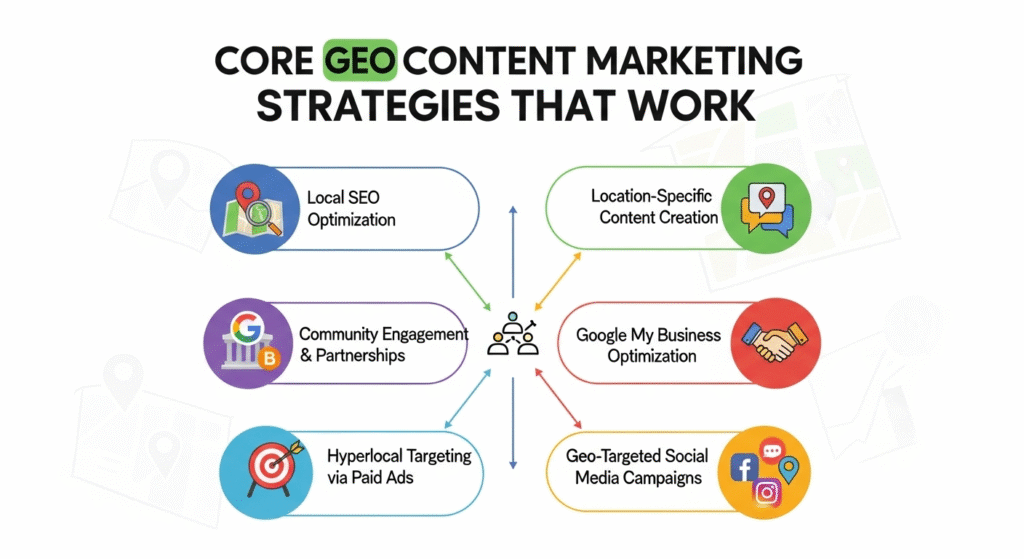
4. Core GEO Content Marketing Strategies That Work
Let’s examine the most effective methods that make up high-performing GEO campaigning in the United States.
1. Localized Keyword Optimization
Include regionally specific keywords naturally throughout your text.
Example: Instead of “best SEO services,” you could use “best SEO services in Utah” or “USA-based SEO strategy for small businesses.”
Tools such as Google Keyword Planner and GSC insights can help you find local-based keywords that have an underlying search intent.
2. Create City- or State-Specific Landing Pages
Create pages that target specific cities or regions where your company operates.
Each page should contain:
- Meta titles and descriptions for local metas
- Contact information and address (NAP uniformity)
- Case studies or regionally specific testimonials
- Schema markups for local businesses
This technique increases the value for both local and organic results from maps.
3. Incorporate Local Events and Culture
Producing content that is in line with local events, festivals, exhibitions, or the interests of your community can help establish your brand as a local authority.
Example An Utah-based marketing company could write “How Utah Startups Can Use Content Marketing to Scale in 2025.”
4. Optimize for Voice Search
Users of voice search often have the geographic location, for example “near me” or “in my area.”
To make sure that the search engine is optimized to be able to use AEO (Answer Engine Optimization):
- Utilize natural language and a the conversational tone.
- Answer FAQs on location-related questions.
- Use schema markup to improve access to the voice assistant.
5. Utilize GEO-Focused Social Media Campaigns
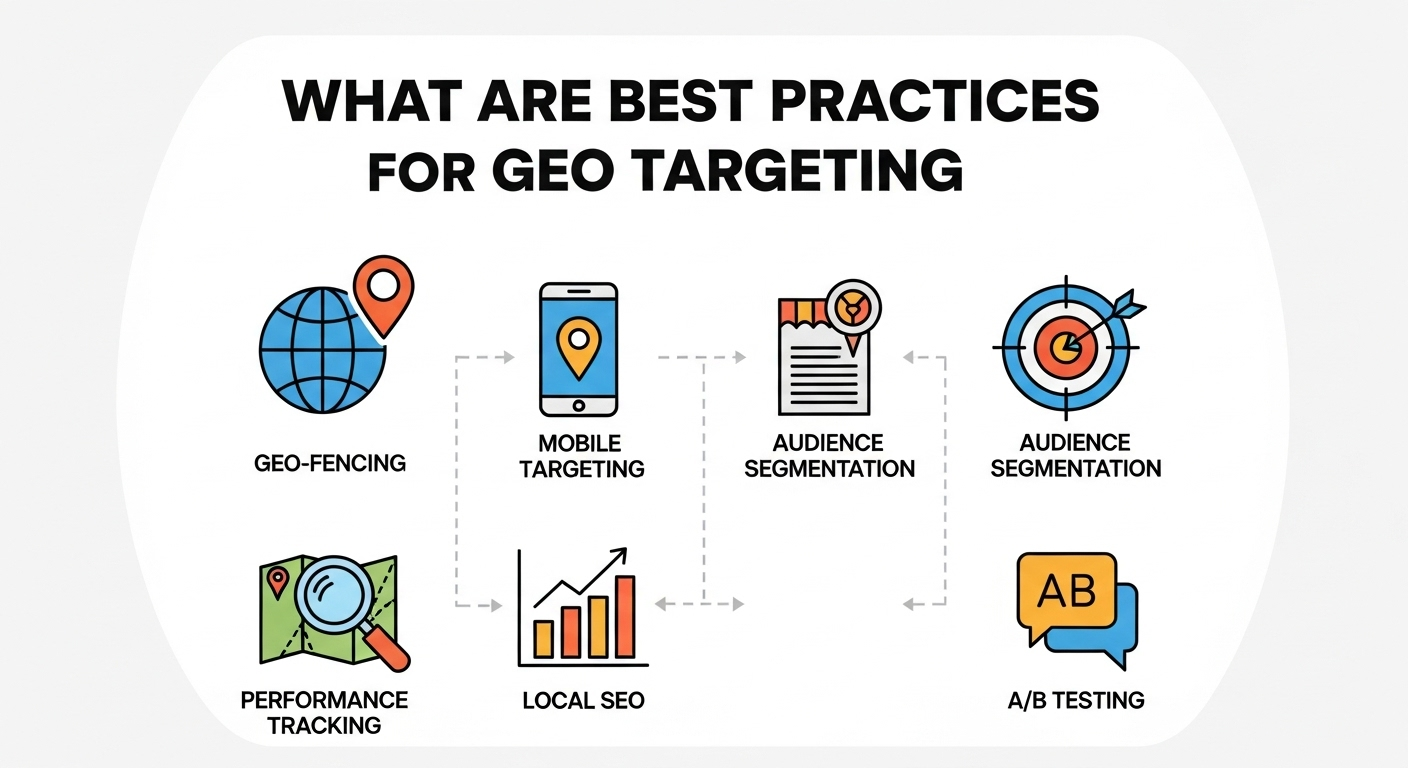
Platforms such as Meta as well as Google Ads allow radius-based targeting. Create separate ads sets for each region of the world using localized copy and images.
6. Analyze Local Search Data
Examine Google Analytics and Search Console data by region. Find out which states or cities are driving traffic, and then adjust your content strategy based on these.
7. Combine GEO Targeting With Semantic SEO
Semantic SEO and GEO optimization work seamlessly.
By understanding the significance behind search queries and connecting them to the local context, your website is more noticeable to both AI-driven and human-driven search results.
5. Advanced GEO Content Techniques for 2025-2026
As search engines change, GEO targeting must adapt to stay relevant. Here are the hottest trends to be aware of:
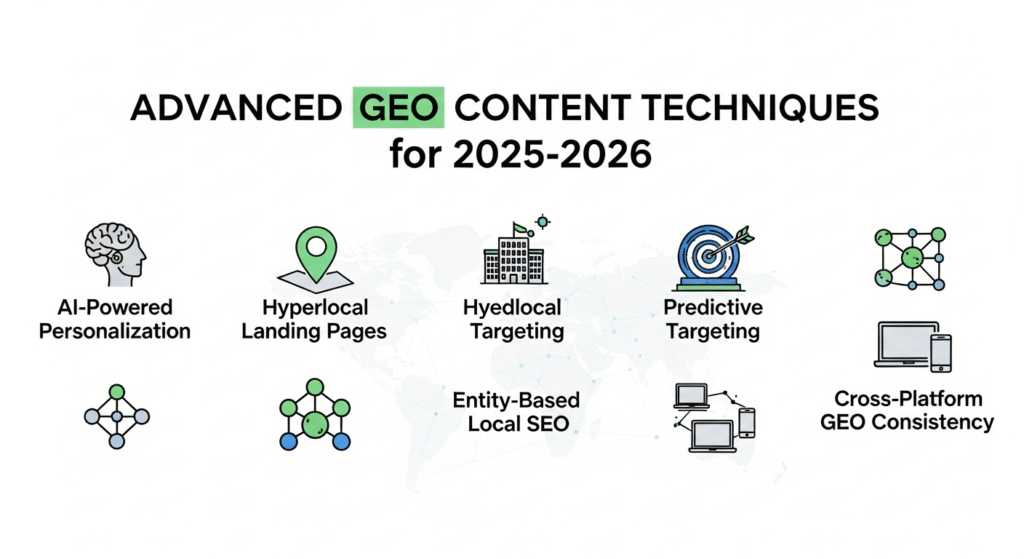
AI-Powered Personalization
AI tools analyze regional trends to provide customized headlines and offers to customers in various U.S. Cities.
Hyperlocal Landing Pages
Beyond state-level optimization, marketing professionals are focusing on micro-areas – like postal codes or neighborhoods, particularly for restaurants, real estate and service-based businesses.
Predictive Targeting
Predictive analytics allows companies to predict when new audiences are likely to emerge and to create content ahead of the competitors.
Entity-Based Local SEO
Through the use of organized data, and by linking entities (company director, founder, and the location), Google can better identify your business’s location with particular regions.
Cross-Platform GEO Consistency
The website’s, Google Business Profile, and your social media profiles must all be identical NAP information to maintain credibility and rank ability.
6. E-E-A-T and GEO Optimization: Building Local Authority
In Google’s E-E-A-T framework–Experience, Expertise, Authoritativeness, and Trustworthiness–local authority plays a vital role.
When those in Utah or California notice your brand generating content on their communities it is a sign of an experience. Verified addresses, thorough “About Us” pages, and success stories that are specific to the location demonstrate the credibility of your brand.
If you’re preparing localized guides or information Make sure that they reflect:
- Real time local data
- Direct experience
- A thorough analysis of trends in the region
- A consistent tone of voice and credibility
This is why solid GEO content can be ranked -and it shows the user that you’re in the same region not only marketing to it.
7. Case Example: Adil Lazar Digital Marketing Agency (USA)
One notable example of GEO-driven achievement can be found in Adil Lazar Digital Marketing Agency -an U.S.-based firm that has earned a reputation for blending local expertise with national strategy.
In AdilLazar.com, the agency makes use of GEO targeting to design campaigns that connect companies with the right audience. Their content is created to rank nationally as well as locally, which makes one of the few agencies that can understand the importance of the ability to scale and localization..
How They Apply GEO Best Practices:
- Localized SEO Pages: Adil Lazar creates distinct pages for the cities and states that they serve, and ensures higher rankings in local SERPs.
- Geo-Intent Content Blogs, pages for landing and case studies correspond in accordance with U.S. search intent -such as “Digital Marketing for Utah Startups” or “SEO Services for American Small Businesses.”
- E-E-A-T Implementation Each article highlights professional experience and clear information, gaining trust from users and more engagement metrics.
- AEO-Ready Structure optimized FAQs and natural languages, and structured data make their content to appear in voice searches and highlighted excerpts.
The result? An expanding client base, stable rankings, and a dependable position all over U.S. search landscapes.
8. Measuring GEO Content Success
Following the implementation of GEO targeting, monitoring the performance of your business is crucial. Important metrics include:
- Organic Traffic by Place Determine which regions drive traffic and converts.
- Local Keyword Rankings: Use tools to track the performance of specific cities.
- Engage Rate Monitor time on page and bounce rate across geographical segments.
- Click-to-Call, Directions or Clicks: For service businesses These metrics show the local presence of your business.
- Conversion based on region: Identify where your most loyal customers are from and then scale your the content effort in line with that.
9. FAQs
Q1 What is what’s the distinction of Local SEO or GEO targetting?
Local SEO concentrates on enhancing the visibility of local search results and GEO targeting goes beyond SEO and customizes ads, content, and messages for certain regions or groups of people.
Q2 What is GEO targeting only for small-sized businesses?
No. National brands also use GEO targeting to create campaigns that are tailored according to regions. It’s a great option for anyone looking to get more engagement and higher conversion rates.
Q3: What is the best way to determine how frequently is it recommended that GEO content be changed?
Update it at least every 6-12 months, or when significant local changes in market or other events occur.
Q4 Do GEO targeting impact the effectiveness of voice search?
Yes. The majority of voice queries contain geographical intention (e.g., “near me”). GEO-optimized content can help you show up in these results.
Q5: Can AI tools improve GEO targeting?
Absolutely. AI can analyze regional data, anticipate the behavior of your audience, and then tailor your content in real-time.
10. Conclusion: Winning the Local and National SEO Game
Beyond 2025 the success of content marketing will depend on the context, intent and the location. GEO targeting lets you effectively connect and effectively with U.S. audiences while maintaining the national reach.
Utilizing localized SEO using entity-based structure and aligning with Google’s E.E.A.T principles, companies can gain an ongoing authority and increase engagement.
Companies like Adil Lazar Digital Marketing are at the forefront of this change that are demonstrating how the right mix of localization, strategy and semantic precision could make any company stand out in the crowded digital market of America.
No matter if you’re targeting Salt Lake City or the entire nation geo-focused content marketing can be a way to rank higher, making conversions more quickly, and establishing authentic community trust.