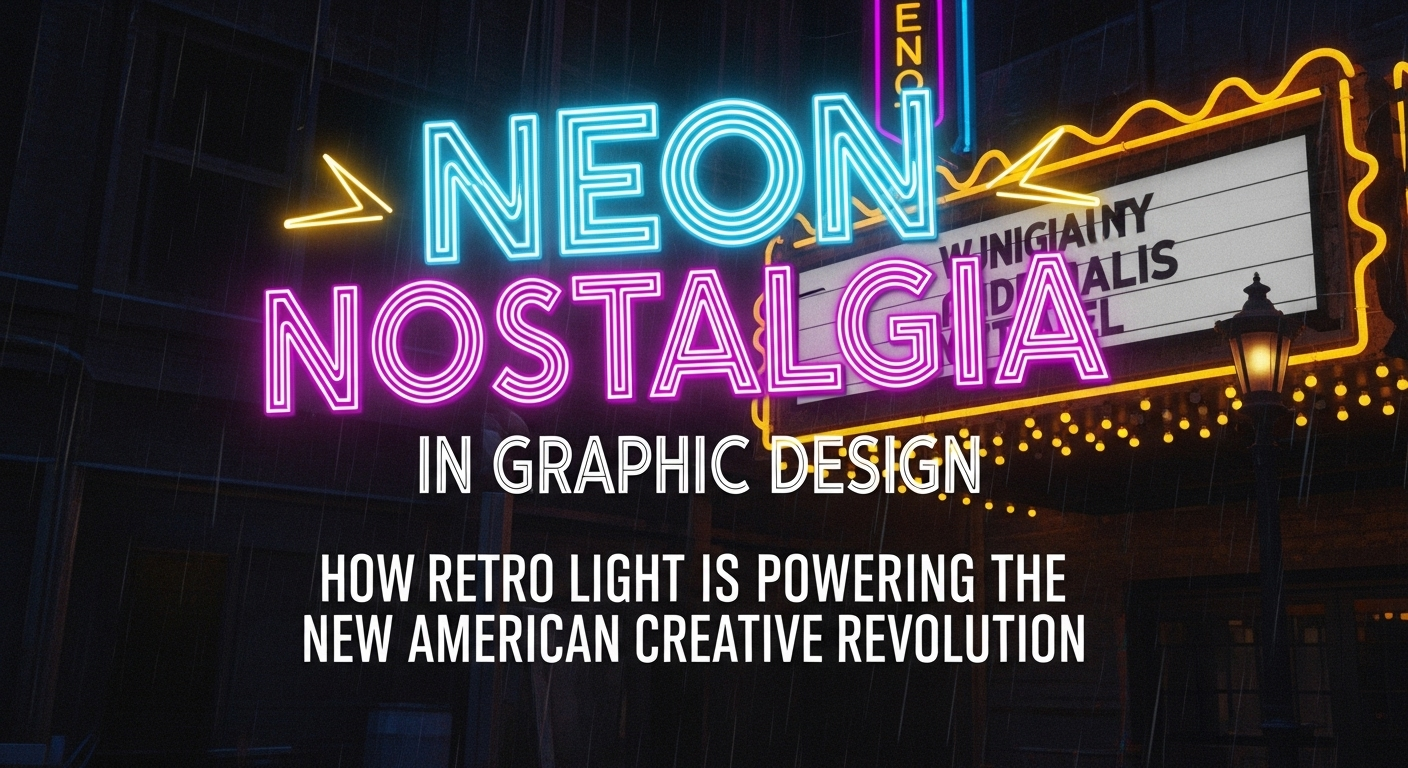
All across all across the United States, creative energy is exploding brighter than ever – literally. From the bright billboards of Las Vegas to the soft reflections of pink in New York cafes, neon nostalgia in graphic design is changing the way American brands portray their personalities.
The idea of an attempt to bring back the 1980s ‘ style has now evolved into a new trend that blends emotions, culture, with the latest technology. Marketers and designers alike are taking a liking to neon’s brightness not only for its aesthetics but also for its psychological appeal–that instant jolt of awe and appreciation that binds people to something familiar and yet new.
This is the tale of how neon light is changing the definition of creativity, the importance of it for U.S. brands and how top agencies such as Adil Lazar Digital Marketing transform that nostalgia into tangible growth.
The Electric Comeback: Why Neon Nostalgia Is Lighting Up the American Design Scene
Every decade defines how “modern” means. The early 2000s were dominated by minimalism. Then came the functional and flat design of the decade. But the decade of 2020 offered something new, a need for warmth, emotion and a sense of humor.
The consumers of the U.S. were looking for color once more. They wanted movement, vibrancy, life. The result was that neon returned, not as a throwback to the past instead, but rather a sign of creativity and confidence.
From the branding of startups from startup branding in Silicon Valley to fashion editorials in New York, designers discovered that neon could be vintage and modern simultaneously. This results in a renaissance that combines all the good aspects of the ethos of the past, and the technological advancements of the future.
Back to the Future: The Cultural Roots of Neon Design
To fully understand the phenomenon of neon nostalgia, it is necessary to revisit the moments in culture that helped make it famous.
The 1980s and 1990s in America were a time of optimism and light. Cities were illuminated by neon advertising. Arcades, music videos and film posters featured bright patterns and chrome lettering.
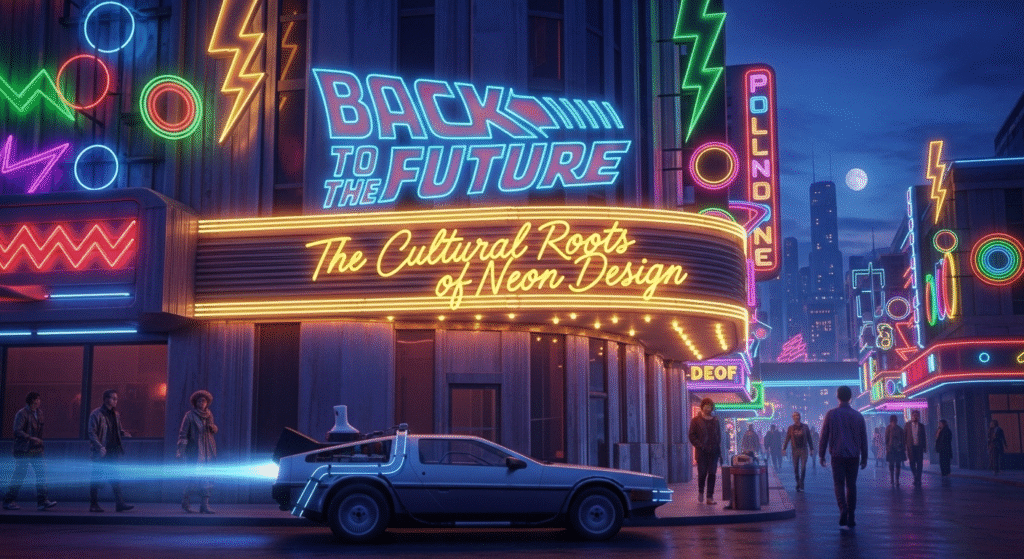
The images reflected a nation intrigued by innovation and progress. The light didn’t just serve as a symbol of beauty, it represented the potential.
If designers of today invoke that glow, they’re not just copying the past, they’re creating the same sensation–the conviction that creativity can inspire a new generation.
Why U.S. Brands Are Embracing Retro Energy Again
Neon nostalgia is a popular choice in American marketing due to its connection to emotions.
After years of sterile tones and muted minimalistic digital design, consumers were looking for images that inspired them to be moved by something.
Here’s what neon can do to the storytelling of brands within America. U.S.:
- Popularity: Americans associate neon with drive-ins, diners and nightclubs–signatures of freedom and youthfulness.
- Contrast In social media feeds full of neutral tones neon cuts right through.
- authenticity: The nostalgia feels real. It makes people think of actual moments, not just advertisements.
- Multi-purpose: Works across industries–from tech startups to fashion boutiques.
When paired with a plan In conjunction with strategy, neon is more than just color. It’s a form of connection.
Inside the Glow: The Building Blocks of Neon Nostalgia
1. Color Palettes That Radiate Emotion
Bright magentas and electric blues bright cyan highlights, as well as acid greens are the basis of visually appealing language. Designers employ dark backgrounds to create a high-contrast effect and make every hue pulsate with vitality.
2. Glow and Light Effects That Feel Alive
Digital glow effects simulate the glow of actual neon gas. These subtle halos help visuals feel more tactile and immersive, particularly when used on mobile devices.
3. Nostalgic Typography With a Modern Touch
Retro typefaces — bold sans-serifs and logos with scripts, and geometric outlines evoke old movie posters and 1980s signs. Modernized with sleeker curvatures and gradients that are digital they are timeless and fresh.
4. Retro Layouts Enhanced by Modern Design Tools
Designers blend grids reflections, grids and VHS textures to create a modern-day flexibility. The most important thing is balance: old-fashioned depth and modern clarity.
The Psychology of the Glow: Why Neon Nostalgia Works in the USA
American cultural life thrives upon re-invention. People enjoy seeing the familiar reinvented. This is the reason why the neon nostalgia is a popular choice across generations, as it bridges modernity and memory.
Psychologically, neon stimulates enthusiasm and curiosity
- Bright colors boost dopamine levels and increase attention.
- Retro images make you feel happy and relaxed.
- The dynamic contrasts demonstrate confidence and creativity.
In the context of marketing it’s a shortcut to the senses that is one glance and your target audience already gets the message.
Modern Technology Meets Retro Emotion
Digital technology has made neon look more appealing beyond what was achievable in the 1980s.
Designers are now using:
- Layer mixing in Photoshop to give a realistic glow
- Mesh gradients within Illustrator to create soft transitions
- Create brushes to create the look of the tube lighting
- Motion graphics are available in After Effects to create animated glow loops
When combined in conjunction with AR or interactive websites, neon nostalgic is an exciting storytelling medium that combines the charm of the past with the possibilities of the future.
Industries Across America Leading the Neon Revival
- Entertainment and Music: Festivals and concert visuals make use of animated neon graphics in order to convey the energy.
- Streetwear and Fashion: Brands use neon gradients to represent the youth culture and individuality.
- Food and Beverage From the logos of diners to craft beer labels, neon conveys warmth and taste.
- Technology Startups: Neon symbolizes forward-looking and innovative thinking.
- hospitality & tourism: Hotel, club and resorts employ neon images to inspire the sense of excitement and.
Each one of these industries illustrates that when it’s done correctly neon nostalgia doesn’t only appear attractive, but it actually does the job.
Adil Lazar Digital Marketing: Turning Nostalgia Into Data-Driven Success
In the ranks of agencies that are mastering this trend, Adil Lazar Digital Marketing is notable by combining innovation with analytics.
1. Storytelling Through Design Psychology
Adil Lazar’s team doesn’t simply reproduce retro images, they align each color, texture and shine to a brand’s emotional purpose.
2. Applying E-E-A-T Principles
In a firm foundation of every design decision by a foundation of the knowledge, experience and Authoritativeness and Credibility The agency makes sure that design doesn’t just entice but also converts.
3. SEO and AEO Integration
Neon aesthetics are coupled using optimized image metadata and structured content to increase visibility both in traditional and voice results for search.
4. Cross-Platform Consistency
From banners on the web and social media, each hue and color is consistent with the brand, helping clients establish recognizable, cohesive brand identities all across American markets.
Their strategy demonstrates how nostalgia is a strategy not a trick.
AEO + SEO: The Smart Side of Visual Optimization
In the current search landscape the best design must be able to communicate using algorithms.
Agencies that use the concept of Answer Engine Optimization (AEO) ensure that each design element is searched and comprehended. This means:
- Properly tagged images that have Keyword-rich alt texts.
- Schema markup to be used for portfolio pages and pages for case studies.
- Descriptive filenames for faster image discovery.
This combination of storytelling via visuals and technical clarity guarantees that neon aesthetics aid brands achieve a higher rank–not just make them look attractive.
Balancing Retro Glow and Modern Minimalism
Neon design works when it is able to control its light. Too much light is overwhelming and too little suffocates the sense of.
American designers are working on the middle ground, combining sparkling accents with minimal design. The result is a refined design that is nostalgic but modern, creative and professional.
This is precisely what Google’s algorithm rewards: content that entices humans and is simple to comprehend.
Sustainability and Digital Efficiency in Neon Design
Design that is eco-friendly has become an important aspect of the U.S. creative industry. Instead of actual tube lights, the designers are able to simulate glowing effects digitally.
This method is:
- energy-efficient The absence of any lighting source, or electrical use.
- accessible: Easily adaptable across media and devices.
- Green: Reusable templates reduce production of waste.
In this regard the current neon fashion does not only reflect nostalgia but also accountability.
Practical Ways to Use Neon Nostalgia in Your Brand
- The Story You Tell: The neon ads must convey a feeling or mark an era.
- Choose Purposeful Hues Select between two and three dominant neon hues to stay clear of chaos.
- Shade and Balance: Make sure that the text is legible across all devices.
- Integrate SEO right from the Beginning: Use descriptive filenames and captions.
- Tracking Data Use engagement data to improve future visuals.
These steps ensure that innovation is a key factor in achieving tangible business outcomes.
Why “Neon Nostalgia in Graphic Design” Has High Ranking Potential
- search intent: Aligns with both marketing strategy and design questions.
- Content Depth The book covers creative and technical as well as business-related perspectives.
- Keywords Coverage Covers variations such as “retro color palettes,” “American design trends,” and “neon branding.”
- AEO Focus Headings that are clear, subtopics based on questions, and semantic importance.
In essence, this subject will satisfy the curiosity of users as well as the criteria for search engines–the formula to get the best results on the first page.
The Future of Neon Nostalgia in U.S. Graphic Design
Experts say that neon’s next evolution will combine with augmented real-world, AI-assisted color harmony and an interactive motion on web pages. However, at the core the purpose will be unchanged: let people feel by design.
As technology becomes more advanced and sophisticated, authenticity is becoming more valuable. This is why human touch — emotion memories, memory, storytelling –will forever be a part of the neon era.
Agencies such as Adil Lazar Digital Marketing represent that balance by adopting new technologies while remaining grounded in traditional creative principles.
Conclusion: Designing the Glow That Never Fades
Retro-inspired graphic designs with neon colors is much more than a trend, it’s a movement that celebrates the individual, creativity and creativity across America. United States.
It bridges cultures, eras and emotions with the light. It offers American brands the visual language of vibrant and heartfelt, contemporary but rooted in the past.
And when companies like Adil Lazar Digital Marketing harness this glow strategically it’s not just gorgeous, but it’s effective. It’s design that is engaging, converts and lasts.
Its message to U.S. creatives is clear:
Do not be afraid of the light. Learn to master it. Let nostalgia illuminate your future.